
Most Cape Town homes sit within sight of a mountain, the sea or a garden, and plenty of them still feel closed off from all three. Biophilic design is the practice of fixing that. It means designing a home so that light, air, plants and natural materials shape how the rooms feel, instead of being something you look at through a window.
The idea is simple, but it is easy to get wrong. A few pot plants and a linen cushion do not change how a house works. This guide explains what biophilic design involves in practice, why Cape Town conditions change the way it should be done, and which decisions are worth making early, while a renovation or new build is still on paper.
What biophilic design actually involves
Biophilic design works on three levels. The first is direct contact with nature: daylight, fresh air, plants, water and views. The second is the use of natural materials and patterns, such as timber, stone, wool and linen, and textures that look made rather than manufactured. The third is the way the space is arranged, which covers sightlines to the outdoors, a place to sit with your back protected, and rooms that open onto a garden or terrace.
Most people focus on the first two and ignore the third. A home can have good materials and plenty of plants and still feel flat if the layout works against them. A sofa with its back to the view, a window blocked by a cupboard, or a living room with no connection to the garden will undo the effort that went into everything else. That is why biophilic thinking belongs at the start of a renovation, when walls, openings and room positions can still change, and not at the end, when the only thing left to choose is cushions.
Start with light
In the southern hemisphere, north-facing rooms get the best light through the day. Plan your main living spaces around them and open them up as far as the structure allows. Stacking or sliding doors give a room a direct link to the outside. A skylight over a dark passage can change how the whole centre of a house feels. A mirror placed opposite a window pulls daylight further into a room without any extra work.
Cape Town sun is strong, though, and light that is welcome in winter can be damaging in summer. Unprotected silk, dark upholstery and timber floors fade and bleach over a few summers. The answer is not to block the light but to control it. Linen sheers soften direct sun while letting the room stay bright, good blinds handle the harshest hours, and a covered patio keeps the sun off the floor nearest the glass. These choices let you keep the light without paying for it in faded furniture.
Plants that cope with Cape Town conditions
Pick plants for the light and water you can actually give them, not for how they look in a photograph. A plant that suits a bright magazine interior will struggle in a shaded corner, and a dying plant does more harm to a room than no plant at all.
Spekboom tolerates dry spells and bright light, and it is indigenous, which makes it a sensible first choice for sunny spots. Clivia handles shade well and suits darker corners and courtyards. Strelitzia needs a lot of light and room, so it works in a sunny corner with space to grow. Olive trees do well in large planters on bright terraces and in light-filled living rooms, and their grey-green foliage sits well with natural stone and timber.
Cape Town has been through serious water restrictions, so drought-tolerant planting is a practical choice as well as an attractive one. Whatever you choose, plan drainage and watering before you buy, particularly for large indoor planters. A planter without a drainage plan will eventually stain a floor, and a plant that nobody remembers to water will not last the season.
Materials that age well near the coast
Salt air, wind and sun are hard on finishes, so material choice matters more here than in an inland city. The aim is to choose materials that improve with age instead of looking worn.
Timber brings warmth, and oak and walnut are both popular. An oiled finish is easier to repair than a heavy lacquer, because a worn patch can be sanded and re-oiled locally without refinishing the whole floor. Keep dark timber out of rooms with little light, where it tends to feel heavy.
Stone suits the same kind of use, with one caution. Honed surfaces hide wear better than polished ones, which show every scratch. Softer stones such as limestone can stain, so think about where they go, especially in kitchens where oil, wine and citrus are a constant risk.
Metals are where coastal conditions bite. Brass and bronze develop a patina and look better for it. Outdoors near the sea, use marine-grade stainless steel or finishes made for coastal conditions, because ordinary steel and many coated finishes corrode quickly in salt air. For soft furnishings, linen, wool, cotton and jute are comfortable and look good as they soften with use.
Take your colours from outside
The easiest palette is the one you can see from your window: sandstone grey, fynbos green, sand, and the soft blue of the ocean on a still day. Earthy tones like these sit comfortably with natural materials and do not date quickly. White walls are not wrong, but a warmer white with a little depth usually feels better next to timber and stone, because pure white can look cold against natural textures.
Connect the inside to the outside
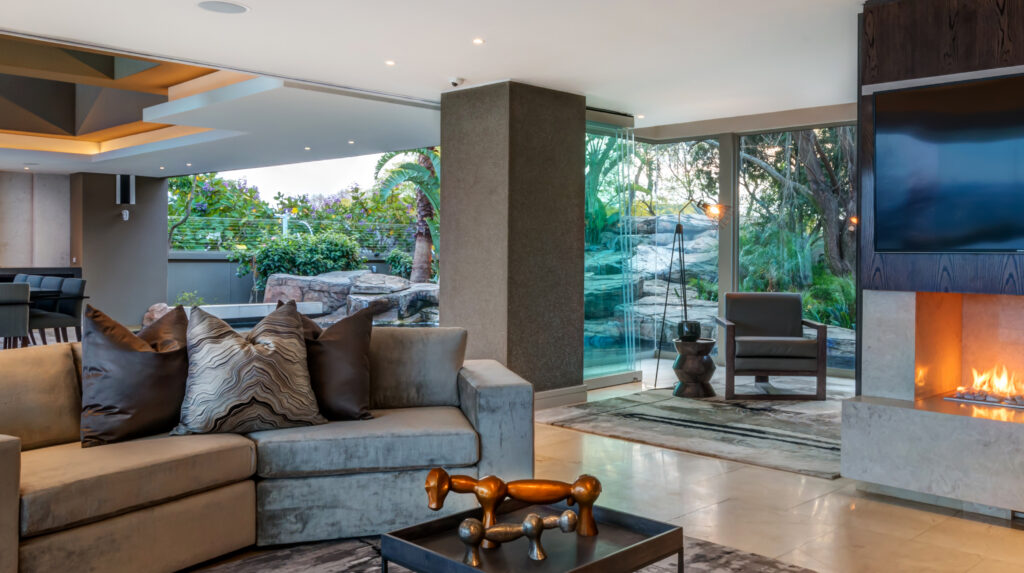
The strongest biophilic homes treat the garden as another room. The simplest way to do that is to run the same or a similar floor finish from the living room onto the patio, so the threshold disappears. Large openings that vanish when open do the same job for the walls, and they let air move through the house on warm days.
The terrace itself has to work in Cape Town weather, not only on calm summer days. The south-easter in summer and the winter rain both limit how often an open patio is usable, so cover part of it and think about wind screens. A terrace that can be used for most of the year does far more for the house than one that looks good in a photograph and sits empty in the wind.
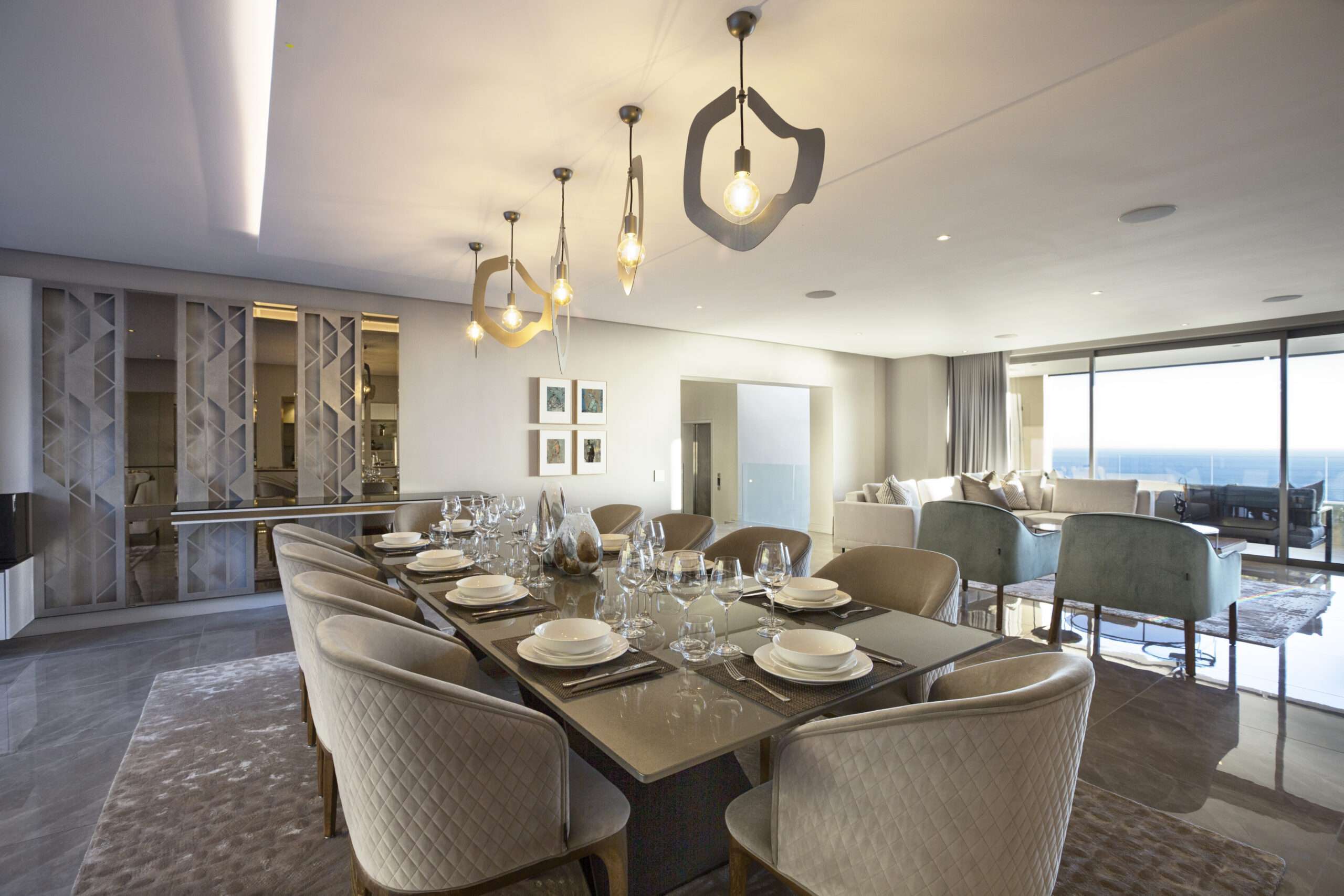
Finally, frame the view. One good view per room, framed by a window or an opening, has more effect than trying to show everything at once. A single sightline to the mountain, a tree or the sea gives the eye somewhere to rest.
Mistakes worth avoiding
The most common mistake is adding plants to a room that has no light. They will not last, and the room ends up worse than before. Using faux greenery as a shortcut is the second: it tends to read as a compromise and collects dust. Choosing materials for their look alone, without checking how they cope with sun, salt and humidity, is the third, and it is the one that costs the most to correct.
The last mistake is treating biophilic design as a trend to follow instead of a way to make the home work better for the people in it. A house that is brighter, quieter, easier to open up and pleasant to sit in will outlast any fashion, which is the real reason to plan for it.
Is it sustainable?
It can be, but the real gains are not in the marketing. Buying fewer, better-made pieces, choosing materials that last decades, and planting indigenous species that need less water do more than any label. A home you do not need to redo in five years is the most sustainable outcome.
Planning a renovation or a new build?
Interiors by Wanda-Michelle designs homes in Cape Town and Johannesburg. If you are planning a renovation or a new home and want light, materials and outdoor space considered together from the start, get in touch to talk through your project.

